Podcasts
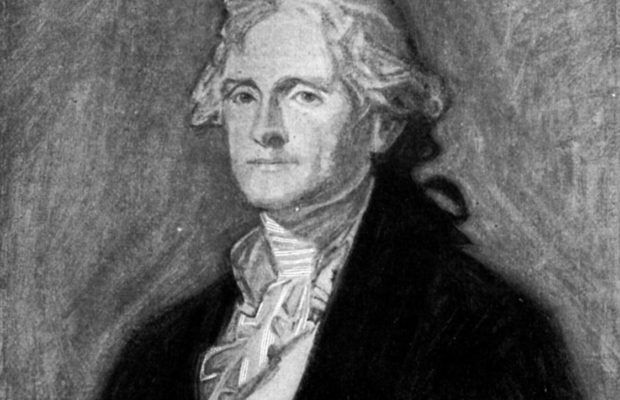
Photo: clipart.com
In this segment, Les Sinclair talks with historian Rick Britton about: This Week in U.S. History –This week, two hundred and twenty years ago, the nation experienced the election of 1800, the country’s fourth presidential election. In what is sometimes referred to as the “Revolution of1800,” Vice-president Thomas Jefferson of the Democratic-Republican Party defeated incumbent President John Adams of the Federalist Party. It was the first transfer of power between two parties, and it ushered in a generation of Democratic-Republican leadership.
Adams had narrowly defeated Jefferson in the 1796election. Under the rules of the electoral system that were in place prior to the 12th Amendment, each member of the Electoral College cast two votes, with no distinction made between president and vice president. As Jefferson received the second-most votes, he was elected vice president. In 1800, both parties formally nominated tickets. The Democratic-Republican ticket featured Jefferson and Aaron Burr, while the Federalists ticket consisted of Adams and Charles C. Pinckney.
The chief political issues revolved around the fallout from the French Revolution and the Quasi-War. The Federalists favored a strong central government and close relations with Great Britain. The Jeffersonians favored decentralization, and denounced the Alien and Sedition Acts, which the Federalists had passed to make it harder for immigrants to become citizens and to restrict statements critical of the federal government.
At the end of a long and bitter campaign, Jefferson and Burr each won 73 electoral votes, Adams won 65electoral votes, and Pinckney won 64 electoral votes. Because of the tie, the election was then thrown into the House of Representatives. Neither Burr nor Jefferson was able to win on the first 35 ballots of the contingent election, as most Federalist Congressmen backed Burr and all Democratic-Republican Congressmen backed Jefferson. Hamilton personally favored Jefferson over Burr, and he convinced several Federalists to switch their support, giving Jefferson victory on the 36th ballot. It had been a troubling experience for the young Republic, so troubling, in fact, that several governors, fearing bloodshed, almost called out their state militias.